
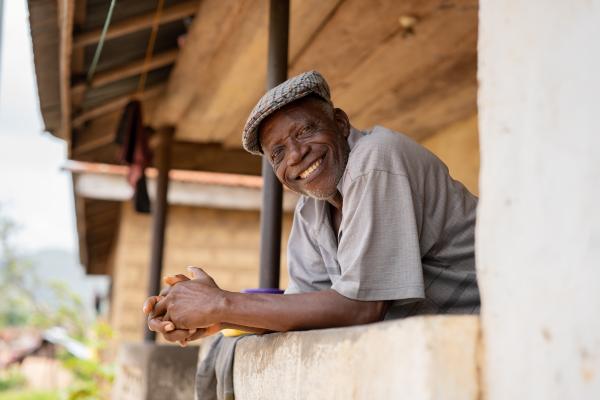
Komba Mansaray once had to travel all the way to Koidu, Kono District’s capital city, to look for treatment.
The 74-year-old has lived in Kombayendeh, a village in Kono that is over two hours away from Koidu, for more than five decades. A former local court chairman, Komba spent years helping resolve disputes in his community. When his own health began to deteriorate, finding effective care took time.
He relied on traditional remedies for about a year as his condition worsened, and he later experienced a stroke. Komba also sought treatment at a private facility in Koidu, but his health did not improve.
His family eventually brought him by motorbike to PIH-supported Kombayendeh Community Health Center (CHC) – which is just a few minutes’ walk from his home – where he was diagnosed with hypertension and immediately started treatment.
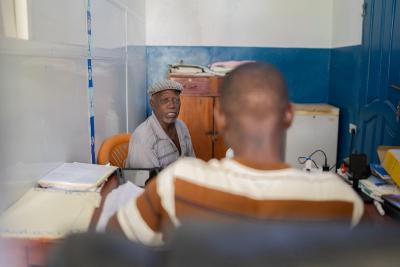
Komba Mansaray, 74, sees a community health officer during his monthly hypertension checkup at PIH-supported Kombayendeh Community Health Center in Kono District, Sierra Leone.
Photo by Sean Andrew Bangura / PIH
Today, over three years later, Komba returns about once a month. Health workers monitor his blood pressure and overall condition and provide the medication he needs. His treatment can be adjusted based on the results of those regular checks. The stroke he suffered severely reduced the strength of his limbs but, once he started care at Kombayendeh CHC, his wife learned from clinicians how to help him exercise and regain mobility.
He may not be able to walk the distances he could before, but the care he received brought him back in good health and enabled him to move around as he wishes. The short distance from his home to the facility removed one of the practical barriers to staying in care. Traveling to distant health centers costs money and takes patients farther from their homes. At Kombayendeh CHC, Komba can receive routine hypertension care within his own area and access the medication he needs to manage his condition.
Over time, he has also developed a close relationship with the health workers caring for him, particularly community health officer Steven Leigh.
“They treat me well, talk to me well,” Komba said. “They make me laugh.”
Care close to home
Kombayendeh CHC provides outpatient care for a range of conditions, including malaria, hypertension, diabetes, and tuberculosis. The facility also provides selected laboratory services and manages patients who require regular medication and follow-up.
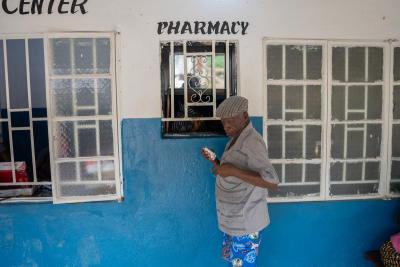
Komba Mansaray, 74, collects his hypertension medicine at the Kombayendeh Community Health Center pharmacy during his monthly checkup visit.
Photo by Sean Andrew Bangura / PIH
Patients needing surgery, hospitalization or more specialized treatment are referred to Koidu Government Hospital (KGH), Kono’s PIH-supported district hospital.
Leigh has worked at Kombayendeh CHC since 2022 and joined Partners In Health Sierra Leone in 2023. Many of the patients he sees would otherwise have to travel much farther for routine care.
That distance matters particularly for people who need repeated appointments. Someone living with hypertension or diabetes may need monthly medication, regular checks and continued monitoring over many years.
PIH works alongside Sierra Leone’s Ministry of Health to support the facility with medicines, laboratory materials and other resources used in patient care. Some vulnerable patients can also receive support with transportation when they need referral care.
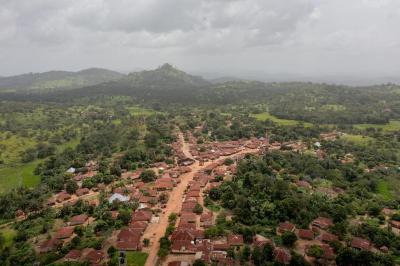
The Kombayendeh Community Health Center was renovated and expanded with PIH support and formally reopened in late 2021, with improvements including reliable ininfrastucture, stronger supply systems, additional staffing, and clinical mentorship.
Photo by Sean Andrew Bangura / PIH
Across Sewafe, Kombayendeh and Gandorhun, there was a 7% increase in the number of patients visiting supported peripheral health units in 2025 compared with the previous year.
Continuing treatment after diagnosis
Sallieu Jalloh entered the health system from a different direction.
Around three years ago, a persistent cough was followed by back pain. Sallieu travelled directly to KGH, where he was tested and diagnosed with tuberculosis (TB).
Once the diagnosis was made, his treatment could continue closer to home.
He was referred to Kombayendeh CHC and completed six months of TB treatment there: two months of intensive treatment followed by four months of continuation therapy.
Each month, he returned to the facility for medication and monitoring. A community health worker also visited him at home, initially about every two weeks and later monthly, checking on his treatment and providing health education.
After completing the treatment course and follow-up testing, Sallieu was declared free of TB.
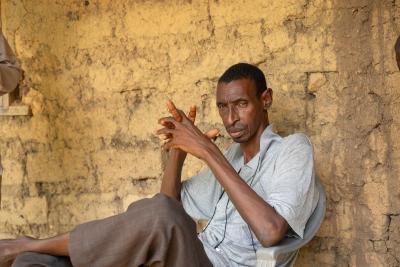
Sallieu Jalloh is a resident of the Kombayendeh area in Kono District, Sierra Leone. He completed six months of treatment at the PIH-supported Kombayendeh Community Health Center and has since fully recovered.
Photo by Sean Andrew Bangura / PIH
Sallieu’s home visits reflect a wider part of PIH-SL’s work in Kono. In 2025, 119 community health workers supported 5,344 patients, while the number of patients accompanied to clinical visits increased by 39%.
His care moved from diagnosis at KGH to treatment at Kombayendeh CHC and follow-up in the community, allowing most of the six-month treatment period to happen nearer to where he lived.
From pregnancy to ongoing care
Just next door to Kombayendeh CHC is the school where Alice Finda Bortor and her husband teach.
In February 2026, Alice was expecting twins, placing her pregnancy at higher risk and requiring closer monitoring. In the later stages of her pregnancy, she received antenatal care at PIH-supported Wellbody Clinic which is a 10-minute drive away from Koidu Government Hospital and is better positioned to monitor high-risk pregnancies.
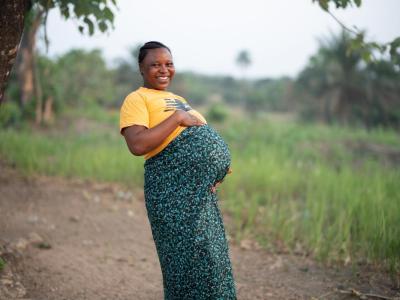
Alice Finda Bortor near the birth waiting home at PIH-supported Wellbody Clinic in Kono District. Bortor, a teacher expecting twins, was asked to stay at the waiting home due to living far away. She received antenatal care at Wellbody throughout her pregnancy.
Photo by Caitlin Kleiboer / PIH
Because Alice lived far from the clinic, she stayed at Wellbody’s birth waiting home as her delivery approached, allowing her to remain close to clinical care and within easy reach of KGH if complications arose.
She was later referred to KGH’s newly opened Maternal Center of Excellence (MCOE), where the twins were delivered by cesarean section. They spent a short period in the neonatal intensive care unit before the family returned home.
Their care continued even after discharge. Alice received follow-up for her cesarean wound and medication. Her twins have since received vaccinations, routine weight monitoring and treatment for illnesses including malaria and colds through primary care services.
Their health center is now only steps away from the classrooms where Alice and her husband spend their working days. Her pregnancy took her from antenatal care at Wellbody to specialist maternal and newborn services at the MCOE, and then back to community-level care for herself and her children.
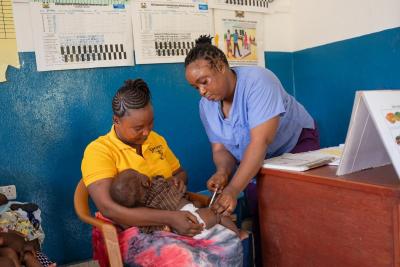
Ministry of Health nurse Margaret Komba (right) vaccinates Alice Finda Bortor’s son, Sahr Kamanda, at the PIH-supported Kombayendeh Community Health Center in Kono, Sierra Leone.
Photo by Sean Andrew Bangura / PIH
Strengthening the first level of care
PIH-Sierra Leone’s primary care work is aimed at making quality care available closer to where people live.
“Our goal is to ensure that every person, regardless of where they live, can access high-quality health care close to home,” said Dr. Yusupha Dibba, director of primary care at PIH-Sierra Leone.
Working with the Ministry of Health, PIH-SL supports frontline facilities through investments in infrastructure, health worker training and mentorship, medical equipment and supplies, and improvements to water, sanitation and power systems.
Primary care facilities are also linked to KGH through a referral network for patients who need specialized diagnostics, inpatient treatment, emergency intervention or other services that cannot be provided at community level.
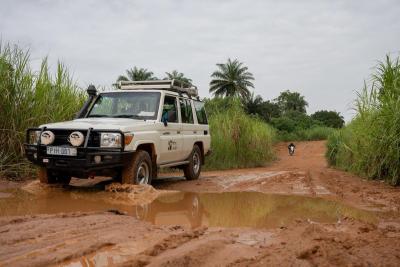
Located over two hours away from Koidu Town, Kono District’s capital, the Kombayendeh Community Health Center is one of the primary care facilities through which PIH-SL works to bring quality health services closer to rural communities in Kono.
Photo by Sean Andrew Bangura / PIH
PIH-SL supports communication and coordination between facilities, while patient accompaniment and referral support can help patients reach higher levels of care when needed.
Dibba says stronger infrastructure, more reliable services and continued clinical support have helped improve the experience of patients seeking care and increased confidence in primary health facilities.
“Strong primary health care is the backbone of an equitable health system,” he said. “By investing in frontline facilities, health workers, and community partnerships, we are helping ensure that every patient can access quality care when and where they need it.”
A shorter journey to care
On any given day at Kombayendeh, the reasons patients arrive can look very different.
Komba will continue returning for hypertension care. Sallieu no longer needs TB treatment but knows where to seek care if new symptoms develop. Alice can bring her children to the health center beside the school where she works, months after a pregnancy that required referral to specialist care in Koidu.
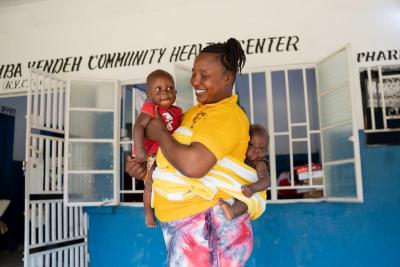
Alice Finda Bortor visited PIH-supported Kombayendeh Community Health Center in Sierra Leone with her twin children, Sahr and Yei.
Photo by Sean Andrew Bangura / PIH
Steven Leigh sees those needs pass through the same facility. Some patients can be treated there, while others need referral. Many return for medication, monitoring or follow-up over months or years.
For people living far from Koidu, having that first point of care nearby shortens the distance between needing care and receiving it.
Komba expects to be back next month for his next hypertension check.