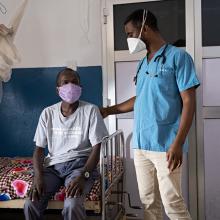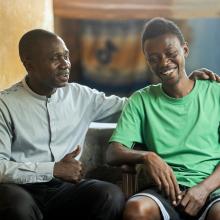
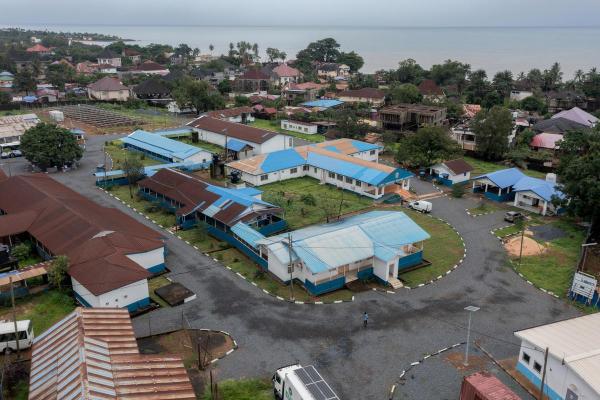
Lakka Government Hospital is Sierra Leone’s main referral hospital for people diagnosed with multidrug-resistant tuberculosis (MDR-TB), a form of TB that does not respond to some of the most common TB medicines. Patients arrive from across the country, many after being identified through the National Leprosy and Tuberculosis Control Program’s district referral system. Others come directly when symptoms such as persistent coughing, weakness, or breathlessness push them to seek care.
25 year-old Santigie M. Conteh is one of the many patients who have been receiving treatment at the hospital and, about four months after he was first admitted in February 2026, his discharge day from the hospital has finally arrived.
The morning begins with a walk across the hospital grounds.
He moves over gravel paths and under iron-sheet-covered walkways that connect the wards, clinic, laboratory, pharmacy, and support offices. Around him, the hospital has already entered its daily rhythm. Patients wait outside the outpatient department on benches under a shed. Nurses in white uniforms move between their stations, calling names, checking charts, and helping the day’s clinic flow from one stop to the next.
Santigie knows the route, and his discharge unfolds step by step.
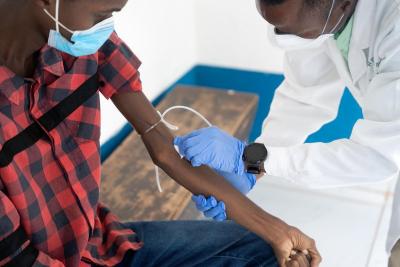
Santigie M. Conteh completes laboratory testing before discharge at Lakka Government Hospital. The testing is part of the ongoing monitoring used to track patients’ response to multidrug-resistant tuberculosis (MDR-TB) treatment and identify any complications.
Photo by Joshua Mukinisha/PIH
First comes the clinical workup. Staff check his blood pressure, measure his weight, and send him for an X-ray. Then he provides a mucus sample coughed up from his lungs, called sputum, part of the continued testing used to monitor patients with MDR-TB. From there, he walks to the outpatient department, where he sits with other masked patients until his name is called.
Inside the clinic, doctors review patients one by one. Each file carries a record of symptoms, test results, medication history, setbacks, improvements, and the next decision in care. When Santigie’s turn comes, the doctor assesses his progress and sends him onward to the clinical lab for blood tests.
After the blood draw, he goes to the pharmacy to collect the medication he will continue taking after discharge.
By then, the morning has carried him across much of the hospital. He pauses beneath the mango tree in the courtyard, where benches circle the shade and patients often gather for fresh air, games, conversation, or a few quiet minutes away from the wards.
For Santigie, the pause says something about how far he has come.
When he first arrived at Lakka, he couldn’t move through the hospital like this. He came in weak, struggling to breathe, and unable to walk by himself. Before his referral, he sought care at another hospital, where testing confirmed that he had tuberculosis. As his condition failed to improve, he was told the medicine available there would not cure him and that he needed specialized care.
At Lakka, staff explained what MDR-TB is, how it spreads, why wearing a mask matters, and why treatment would take time. Doctors and nurses checked on him at different points of care. Meals helped him regain strength. Counselors and social workers visited him. Other patients who improved encouraged him to keep going.
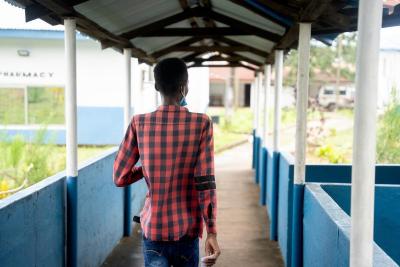
Santigie M. Conteh moves through Lakka Government Hospital on the day of his discharge, passing through clinical review, laboratory testing, pharmacy services, social support, and food assistance before returning home.
Photo by Joshua Mukinisha/PIH
Now, on the day of his discharge Santigie can walk from ward to clinic, from clinic to lab, from lab to pharmacy, and from pharmacy to the shade of the mango tree without tiring as quickly or needing the same support he once required.
Still, discharge does not end with the medicine in his hands.
After resting, Santigie continues to the PIH social support office, where he receives cash support for transportation. His final stop is the area where food support items are provided, supplies meant to help him continue treatment after returning home.
For patients with MDR-TB, leaving the hospital is a milestone in a longer journey. Medication must still be taken. Follow-up appointments must still be kept. Food, transport, family support, and the ability to return for review can determine whether recovery stays on track.
At Lakka, care is built around that reality. The work begins with diagnosis, then continues through admission, daily treatment, nutrition, counseling, infection prevention, discharge planning, and follow-up after patients return home.
Getting MDR-TB Patients into the Right Care
Since 2017, more than 1,300 patients have been enrolled in Sierra Leone’s MDR-TB treatment program, which has reported a treatment success rate of about 78%, above the global average of 59%. These numbers show why Lakka’s model of clinical care, social support, and follow-up matters beyond a single hospital ward.
Patients are commonly referred through district TB supervisors, who identify cases and connect patients to care. When resistance to key medicines is confirmed, the patients are then referred to Lakka Government Hospital where they can receive specialized care. Diagnosis is the first turning point. Once tests show that TB medicines are no longer working as they should, the patient may need different medication, closer monitoring, infection prevention measures, and counseling to understand what treatment will require.
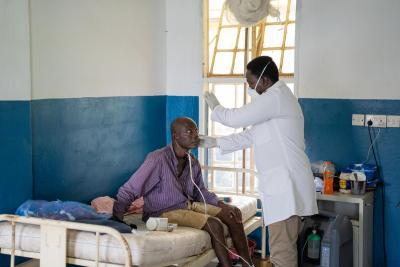
Dr. Ronnie Harding (right), Medical Superintendent of Lakka Government Hospital, examines patient Jusufu Macavoray during his rounds at the hospital.
Photo by Sean Andrew Bangura/PIH
At Lakka’s laboratory, GeneXpert and Truenat machines help staff diagnose TB and detect whether the disease is resistant to key medicines. Results are often available on the same day, which allows patients to begin treatment earlier and reduces the risk of their condition worsening before the right regimen is started.
For Dr. Girum B. Tefera, PIH Sierra Leone’s TB/HIV Program Manager, Lakka’s role is part of a broader effort to expand MDR-TB care in Sierra Leone. A few years ago, he says, the country had far more limited capacity to treat drug-resistant TB. Today, Lakka serves as a national referral center, receiving patients from across Sierra Leone, including areas near the borders with Liberia and Guinea.
PIH supports Lakka in close collaboration with the Ministry of Health, focusing on what happens once patients arrive: the quality of care they receive, the systems that support that care, and the social support that helps them remain in treatment.
“We are just there to support and to make sure patients are in safe hands,” Tefera said.
The Daily Work of Treatment
Inside Lakka, MDR-TB care is built through repetition.
Long before the hospital grounds fill with movement, treatment has already begun. MDR-TB drugs are administered early in the morning, often by the night nurses before the day shift takes over. Later, nurses continue giving additional medicines and checks such as temperature, pulse, blood pressure, and blood oxygen levels, and the quieter work of noticing who is improving, who is discouraged, and who may need closer attention.
For Isata Bawoh, a senior nursing officer at Lakka, blood oxygen levels are especially critical, she says, because a patient who seems stable at night can change by morning.
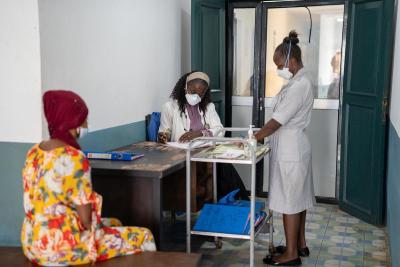
At Lakka Government Hospital, Dr. Suba M’bayo (middle) and Ministry of Health nurse Adama Bagoley (right) provide medication to Jemilatu Jalloh (left), a patient with multidrug-resistant tuberculosis (MDR-TB).
Photo by Sean Andrew Bangura/PIH
Medication is closely monitored. Nurses follow each patient’s chart and treatment plan, but the work does not end with handing over pills. For MDR-TB patients, swallowing medication can be one of the hardest parts of treatment. Patients must take several pills a day, and treatment can last six months, 12 months, or even 18 months, depending on the regimen and the patient’s condition.
Because of that, nurses practice direct observation; they remain with patients until the medication is swallowed.
Some patients struggle with the number of pills. Some are afraid of taking so many tablets. Others become tired of the long routine and side effects. Nurses respond by explaining why the medication matters, acknowledging the difficulty, and reminding patients what can happen if treatment is interrupted.
The burden of MDR-TB treatment has changed significantly in recent years. Dr. Girum says Sierra Leone is the first country that adopted the shorter six-month MDR-TB, known as BPaL/M, treatment according to current World Health Organization recommendations. In the past, patients could take 16 to 20 tablets a day, sometimes with daily injections, for close to two years. BPaL/M uses a newer combination of medicines and has reduced treatment to five to seven tablets a day for many patients. Some cases extend to nine months depending on the patient.
That shift has reduced the pill burden, but it has not made treatment easy. Some patients still require longer or individualized regimens because they are not eligible for the shorter course, have complications, or need care adjusted to their clinical condition.
“The drugs are painful,” Tefera said. “They need encouragement, they need support all the way for them to complete to the last dose of their treatment.”
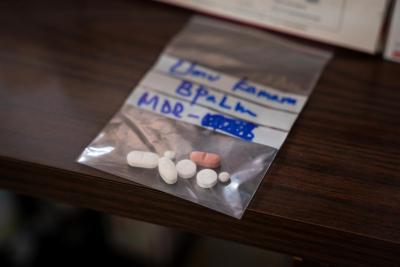
Dr. Girum B. Tefera, HIV/TB program manager, prepares one day of BPaLM treatment for MDR-TB patients.
Photo by Chiara Herold/PIH
For Santigie, that daily attention mattered. With medication, meals, vitamins, and regular care, he began to feel stronger. He also drew encouragement from other patients who improved and left the hospital. Seeing them gave him a reason to believe that his own treatment could work.
Bawoh sees that change often. Patients who arrive weak, quiet, or discouraged may become more active as treatment begins to work. They smile during rounds. They gain weight. Their test results improve. Some who once resisted medication begin asking for it.
For patients with MDR-TB, care is measured by whether the patient can stay the course until treatment is completed.
Food as Part of Treatment
At Lakka, food is part of the treatment plan.
MDR-TB medication can be heavy on the body. Patients who are weak, underweight, or unable to eat consistently may struggle to tolerate treatment or regain strength.
Bawoh sees this at the bedside. Some patients arrive malnourished and need special diets or additional nutritional support. Nurses encourage them to eat, drink supplements, and understand that food is part of how their bodies recover. Sarah P. Kamara, a social worker with PIH’s Lakka team, sees the same challenge in patients’ daily decisions after discharge. Some patients, especially those who are breadwinners, may skip medication because they need to leave early for work and know the drugs can make them dizzy, sleepy, or weak. Others avoid taking medication when they do not have enough food, because the drugs can be difficult to tolerate without a proper meal.
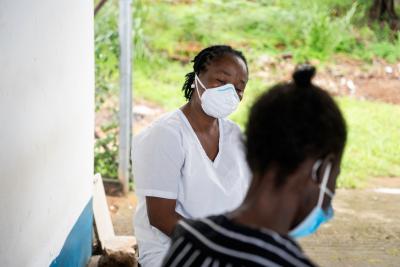
Mariama Koroma (pseudonym)(right), a patient at Lakka Government Hospital, talks with Zainab Jalloh, a state-registered nurse who has served at the hospital for three years.
Photo by Joshua Mukinisha/PIH
“If you take the medication and you do not have enough food to eat, it might be difficult to tolerate,” she said, noting the extreme weakness, dizziness, and nausea patients typically report.
For patients with a low body weight, consistent food support can change the course of admission. Bawoh says nurses often see patients gain weight before leaving, and that improvement is tracked alongside clinical tests and daily observation. Patients who regain strength often become more active, responsive, and hopeful.
Mariama Koroma’s (pseudonym) experience shows how fragile recovery can become when food and support are not secure. A 29-year-old single mother from Western Urban Freetown, she began MDR-TB treatment at Lakka, got discharged, but later worsened at home after losing her job and struggling to secure food. By early January, she had become severely weak and malnourished, and her aunt brought her back to Lakka for readmission.
Provided by the Ministry of Health, admitted patients receive three meals per day, and PIH provides additional support to severely malnourished patients who meet defined clinical criteria. Through the Global Fund package, the Ministry of Health provides monthly food packages that are given to vulnerable patients beginning at discharge.
Counseling, Stigma, and Staying Connected
MDR-TB can isolate patients long before treatment is complete.
Some arrive at Lakka afraid of the diagnosis and of the hospital itself. Sarah Kamara says some patients come with stories they have heard in the community: that Lakka is a “dead zone,” or a place where patients are abandoned. One of the first tasks of the psychosocial and social support teams is to replace that fear with information.
Within the first 24 to 48 hours after admission, Kamara and the psychosocial team assess new patients. They ask about family background, livelihood, housing, substance use, dependents, and the support available at home. That early assessment helps the team understand what may affect the patient’s ability to stay in treatment.
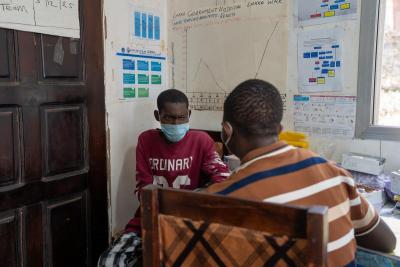
Edward Bendu (left) receives counseling at Lakka Government Hospital after being diagnosed with multidrug-resistant tuberculosis. He is receiving specialized treatment and comprehensive support to aid his recovery.
Photo by Sean Andrew Bangura/PIH
“Once they arrive, they do not really have knowledge about what’s actually going on in the hospital,” Kamara said. Through counseling, staff explain TB, treatment, and what recovery can look like. “It puts their mind at ease and helps them to be positive in taking their medication.”
Many patients arrive carrying fear, shame, worry, or denial. The team responds first through individual counseling, especially for patients who are not ready to speak in a group. As patients stabilize, group counseling, psychoeducation, recreation, and patient-to-patient interaction help reduce isolation. Patients share common problems, encourage one another, and learn from those who are further along in treatment.
Through constant communication and interaction, the psychosocial team helps patients rebuild confidence and believe recovery is possible.
Nurses are often the first to notice when a patient is struggling. Bawoh says some patients explain what is wrong directly. Others become quiet, withdrawn, or visibly discouraged. When nurses notice those changes, they ask questions. Sometimes a patient says they are missing a child, worried about family, or tired of being admitted for so long. When a patient needs additional support, nurses connect them with the psychosocial team.
That connection matters during long admissions. Patients are separated from children, partners, work, and the routines of home. For mothers, this separation can be especially painful because children cannot safely spend extended time in the infectious ward environment.
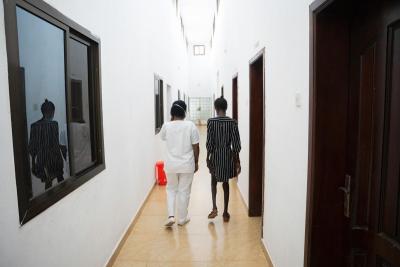
Mariama Koroma (pseudonym) (right) walks through the female ward at Lakka Government Hospital with Zainab Jalloh, a state-registered nurse. Nurses are often the first to notice signs of progress, emerging challenges, or moments when patients need extra support.
Photo by Joshua Mukinisha/PIH
Outside the hospital, stigma can become harder to manage. Some patients do not want nurses to visit their homes because they do not want neighbors to know they have TB or MDR-TB. In some cases, patients are pushed out of their homes after their diagnosis becomes known.
Stigma can turn into a practical care problem. Patients may need rent support, new accommodation, family counseling, or longer-term livelihood support before they can safely continue recovery outside the hospital.
The Systems Behind Safer Care
The care patients receive at Lakka also depends on the hospital environment around them.
Dr. Girum describes PIH’s support through the organization’s “five S’s” approach, a health systems framework that focuses on staff, stuff, space, systems, and social support. At Lakka, that includes training for staff, support for lab supplies, medications, biomedical equipment, infrastructure improvements, and systems that allow care to continue even when specialists are not present.
The physical environment is part of that care. PIH works with the Ministry of Health to create a dignified space for patients, many of whom travel long distances and stay away from family while receiving treatment.
Reliable electricity matters for patients who depend on oxygen. Harding says the hospital now has a solar system, backup generators, and access to the national electricity grid, helping the hospital provide more consistent power.
Dedicated investments in infrastructure support safer care. For example, recently added coughing booths allow patients to produce sputum samples in dedicated spaces designed with airflow in mind. This helps protect staff and other patients from possible exposure while allowing patients to collect samples with more privacy and dignity.
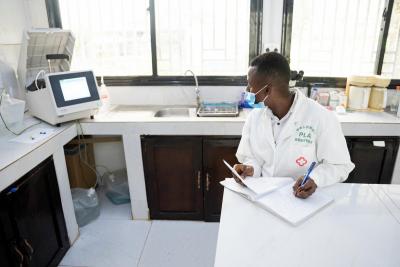
Osman Mansaray, a medical laboratory technician at Lakka Government Hospital, learns to use the Auto Chemistry Analyzer GS100, part of PIH’s support to strengthen laboratory services through equipment and other clinical lab supplies.
Photo by Joshua Mukinisha/PIH
Laboratory systems are very important; they support TB diagnosis, follow-up testing, and help monitor how patients are responding to medication and whether treatment is affecting their organs. Those results help clinicians adjust care, identify complications, and determine whether patients are improving. That matters because side effects can appear at any point, and clinicians need laboratory results and readily available medicines to respond quickly.
These systems are easy to miss when they are working: power for oxygen, water for infection prevention, booths for sputum collection, laboratories for monitoring, pharmacy systems for medication, and records that follow patients through care. At Lakka, they form the infrastructure behind treatment.
The Work of Staying in Care
Santigie’s discharge process shows how much has to happen before a patient leaves Lakka, moving from inpatient care to treatment at home.
Before discharge, clinicians consider whether patients are stable, whether laboratory results are improving, whether they are gaining weight, and whether they can continue treatment outside the hospital.
Recovery continues after discharge, and the home environment can determine whether treatment remains on track.
Bawoh says one common misunderstanding is that patients may think leaving the hospital means treatment is finished. Some patients look physically well and feel stronger, then become less consistent with medication once they return home. For nurses who have cared for them through admission, seeing patients return for readmission can be difficult.
“The goal is for you to see improvement,” she said, “not for you to readmit them again.”
Monthly reviews help prevent that. Patients return for checkups, tests, medication, and support packages. Bawoh describes the review process as a kind of accountability point: patients know they will be assessed, and that helps encourage them to continue treatment. The monthly food and transport support also help patients return for review and to collect their medication.
Tefera says PIH provides transportation support for monthly appointments, inpatient nutritional support for severely malnourished patients, and case-by-case social support for the most vulnerable. In the PIH social support program, some patients receive acute social support to address an immediate need, while others may receive longer-term livelihood support depending on their situation.
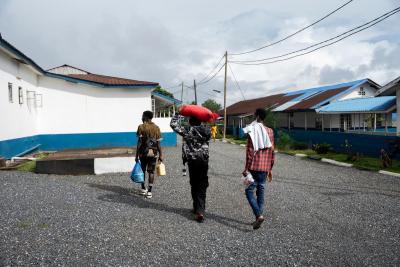
On his discharge day, friends help Santigie M. Conteh (right), an MDR-TB patient, carry his food support package as he departs from Lakka Government Hospital, about four months after he was first admitted.
Photo by Joshua Mukinisha/PIH
The aim is to reduce the barriers that can keep patients from returning to Lakka, collecting medication, completing reviews, and staying in care.
After discharge, Lakka staff continue checking in with patients through follow-up calls, monthly appointments, and support from nurses and social workers when patients are difficult to reach.
Staff also call patients before monthly review appointments. If a patient misses an appointment, they keep calling and tracing until they understand what happened.
This follow-up turns discharge into a continuation of care. The hospital’s responsibility moves from the ward into the community, where patients face everyday pressures that can interrupt treatment.
Santigie is already thinking about those pressures as he prepares to leave; at home, he knows some of that support will be harder to count on. Food especially worries him, but the food package he receives at discharge lessens his worry.
Successful MDR-TB care, Tefera says, is closer to the patient while maintaining quality. Lakka has become an important national referral center, and PIH and the Ministry of Health also support MDR-TB services in Kono. But the service remains centralized, forcing many patients to travel far from home, family, work, and responsibility.
By the end of his discharge process, Santigie has passed through nearly every part of Lakka’s care system. Each stop gives a different part of the same message: recovery must be supported.
For patients like Santigie, that care can mean the difference between arriving unable to walk and beginning to imagine life after treatment.
MDR-TB treatment lasts long and recovery can be fragile. At Lakka, the work of care is to keep patients connected long enough for healing to run its course.